

What is an interior design style?
An interior design style is a recognizable approach to shaping and furnishing a space. You might recognize it through the outline of a chair, a combination of materials, the use of pattern, or the relationship between furniture and the room around it.
Some names refer to historical movements. Others describe regional influences, current preferences or ways of combining old and new. They overlap. A room can have Scandinavian furniture, a minimalist arrangement and a few pieces with mid-century origins.
Use a style name to start a conversation about what you like. Then get specific. "I like the low wooden furniture, textured fabrics and open space around the sofa" tells you far more than "I like modern."
Explore 23 styles through AI-generated room images, then see how your favorites could look in your own space with AI Room Design.
How to read a room beyond its color palette
Look for several clues working together: furniture shapes, materials, patterns and the way the room is arranged.
- What to notice
- Shape and proportion
- Questions to ask
- Is the furniture low or upright, slender or substantial, straight or curved?
- What to describe in your own design request
- "Low seating with rounded edges" or "upright chairs with visible wooden frames"
- What to notice
- Materials and finishes
- Questions to ask
- Do you see grain, weave, metal, glass, polish or uneven surfaces?
- What to describe in your own design request
- "Matte wood and woven fabrics" or "polished metal with a stone tabletop"
- What to notice
- Color and contrast
- Questions to ask
- Are colors close together or sharply different? Where is the strongest contrast?
- What to describe in your own design request
- "A quiet cream-and-brown palette with one dark accent"
- What to notice
- Pattern and detail
- Questions to ask
- Are surfaces plain, botanical, geometric, carved or layered?
- What to describe in your own design request
- "Plain upholstery with one large geometric rug"
- What to notice
- Arrangement and visual density
- Questions to ask
- Are objects paired, loosely grouped or widely spaced? How much is on display?
- What to describe in your own design request
- "Balanced seating around the fireplace, with a few objects on each shelf"
| What to notice | Questions to ask | What to describe in your own design request |
|---|---|---|
| Shape and proportion | Is the furniture low or upright, slender or substantial, straight or curved? | "Low seating with rounded edges" or "upright chairs with visible wooden frames" |
| Materials and finishes | Do you see grain, weave, metal, glass, polish or uneven surfaces? | "Matte wood and woven fabrics" or "polished metal with a stone tabletop" |
| Color and contrast | Are colors close together or sharply different? Where is the strongest contrast? | "A quiet cream-and-brown palette with one dark accent" |
| Pattern and detail | Are surfaces plain, botanical, geometric, carved or layered? | "Plain upholstery with one large geometric rug" |
| Arrangement and visual density | Are objects paired, loosely grouped or widely spaced? How much is on display? | "Balanced seating around the fireplace, with a few objects on each shelf" |
Try a quick exercise. Imagine the room in black and white. Which shapes and arrangements would still make it recognizable? Now bring back the materials. This helps you separate a design's underlying character from the color that first caught your eye.
Also ask what belongs to the building. A vaulted ceiling or a wall of factory windows may be doing much of the work in a reference image. You can borrow its furniture and materials without having the same architecture.
Want to see these ideas in your own room? Try AI Room Design. Upload a room photo, choose a style reference, and generate a design image to explore how its furniture shapes and materials could look in your space.
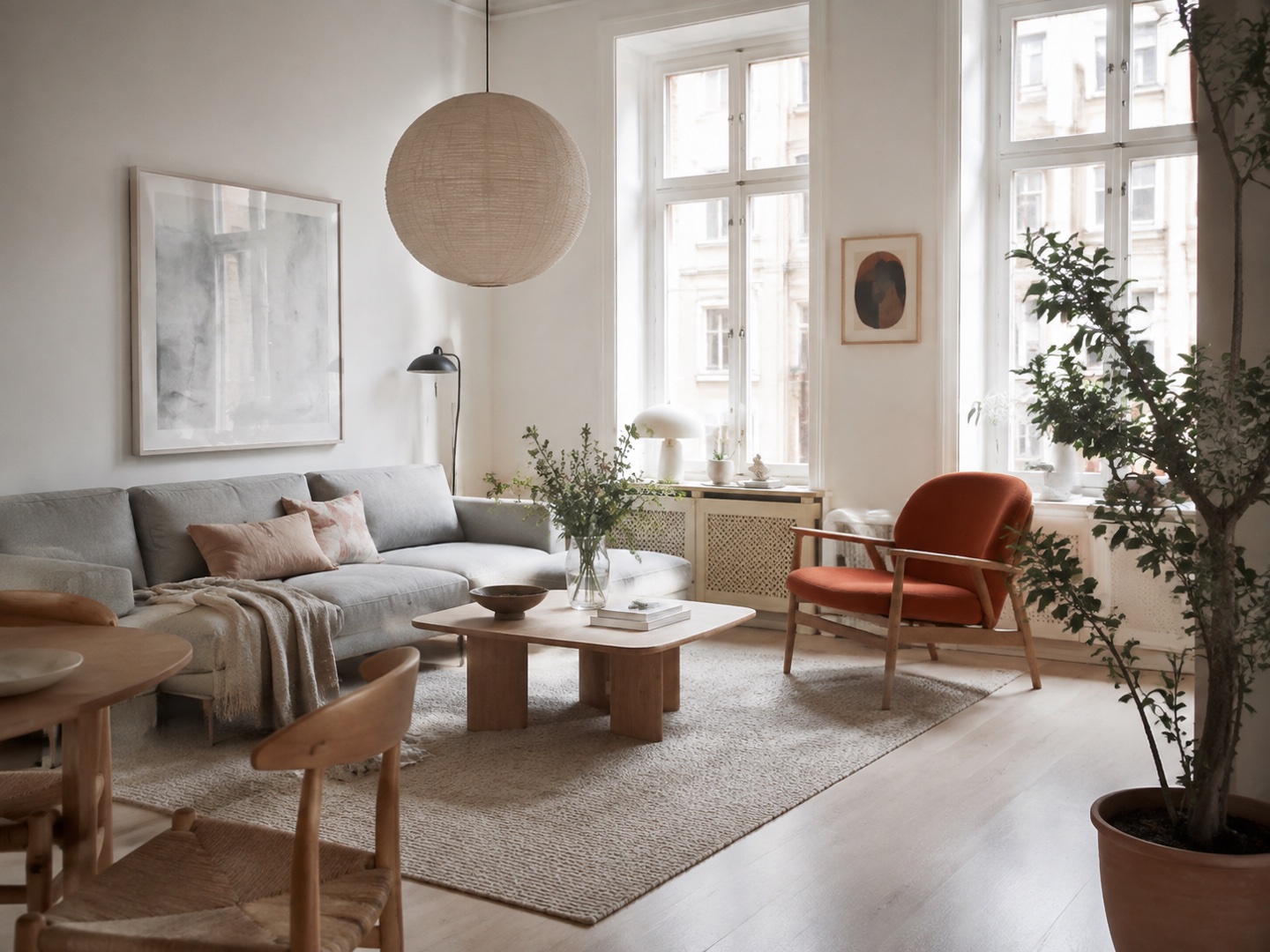
Read this room: Scandinavian
- Follow the slender wooden chair and table frames.
- Compare the woven rug with the softer upholstery.
- Notice the space left between the furniture groups.
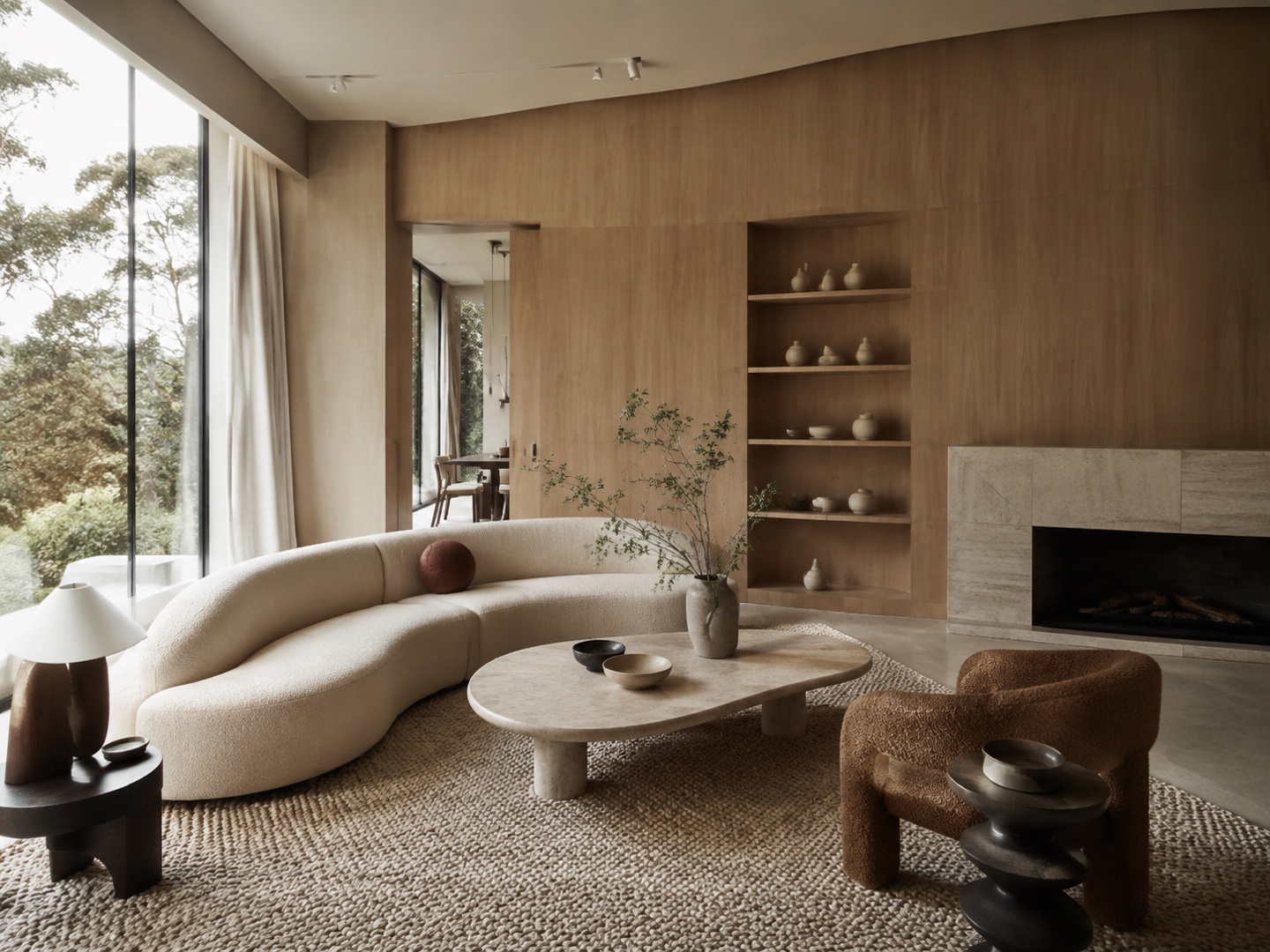
Read this room: Organic Modern
- Follow the rounded outline of the seating.
- Look at the contrast between wood and textured surfaces.
- Notice how a few substantial forms organize the room.
Explore 23 interior design styles
The styles below match the reference choices in AI Room Design. Start with the images you are drawn to, then read what makes them different. Try the small changes suggested under each style to see what appeals to you.
Scandinavian
Scandinavian interiors often combine practical furniture, simple forms and natural materials. An uncluttered arrangement can still feel comfortable and lived in. Pale backgrounds often sit alongside colorful accent furniture and textiles. IKEA's style guide
In our reference, notice the simple wooden furniture, soft textiles and colored chair. Together, these details give the room its relaxed, practical character.
Start with useful furniture and a few textures you enjoy living with. If everything feels too uniform, try one clearly chosen color instead of adding more small decorations.
Mid-Century Modern
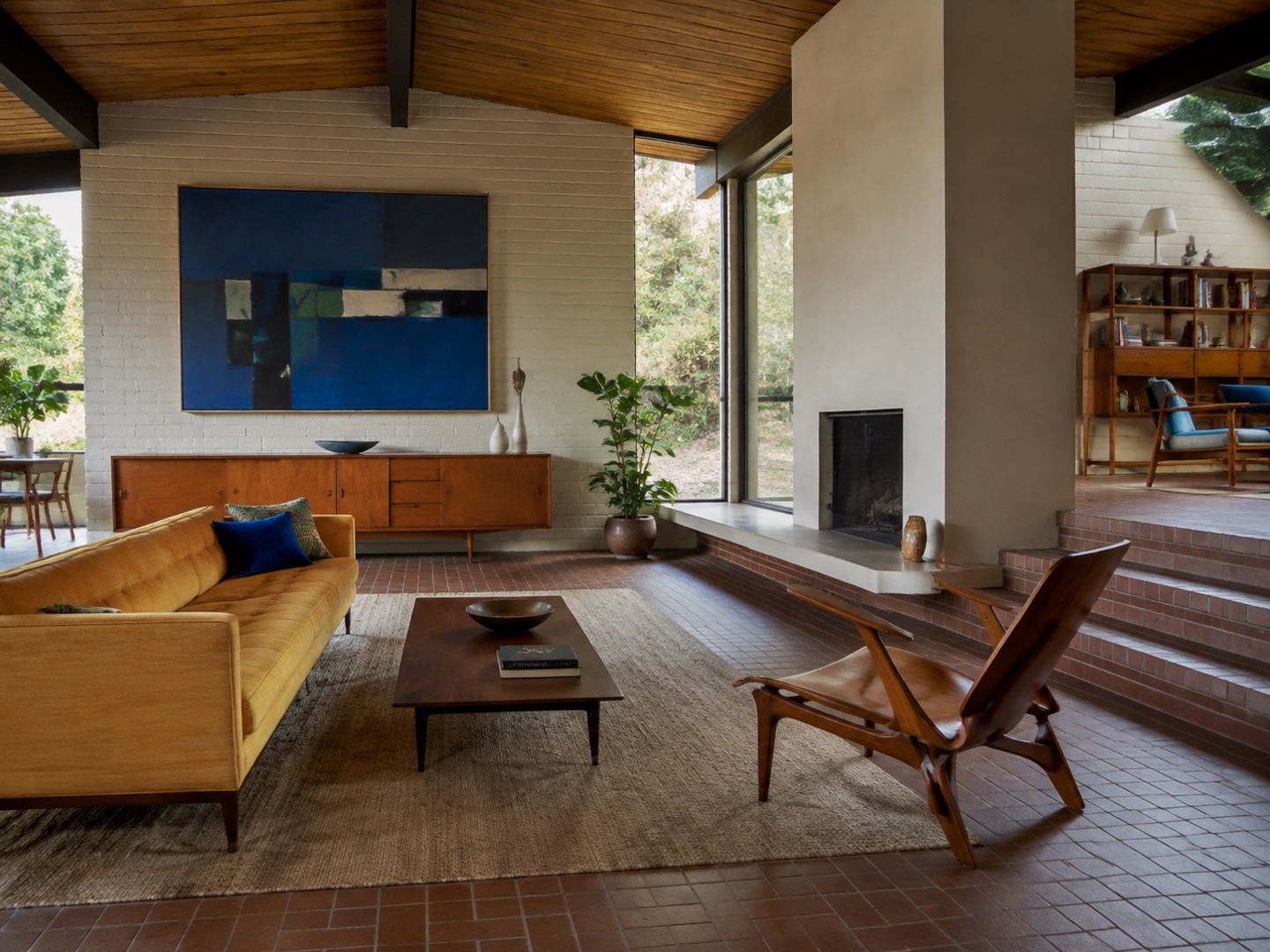
Mid-Century Modern refers to design associated with the middle of the twentieth century. Look for distinctive furniture silhouettes, including tapered legs and organic shapes, alongside wood and materials such as molded plastic or fiberglass. Herman Miller's guide
Our reference pairs low furniture with warm wood and a sculptural chair. A similar direction could begin with one expressive chair and a simple cabinet.
Industrial
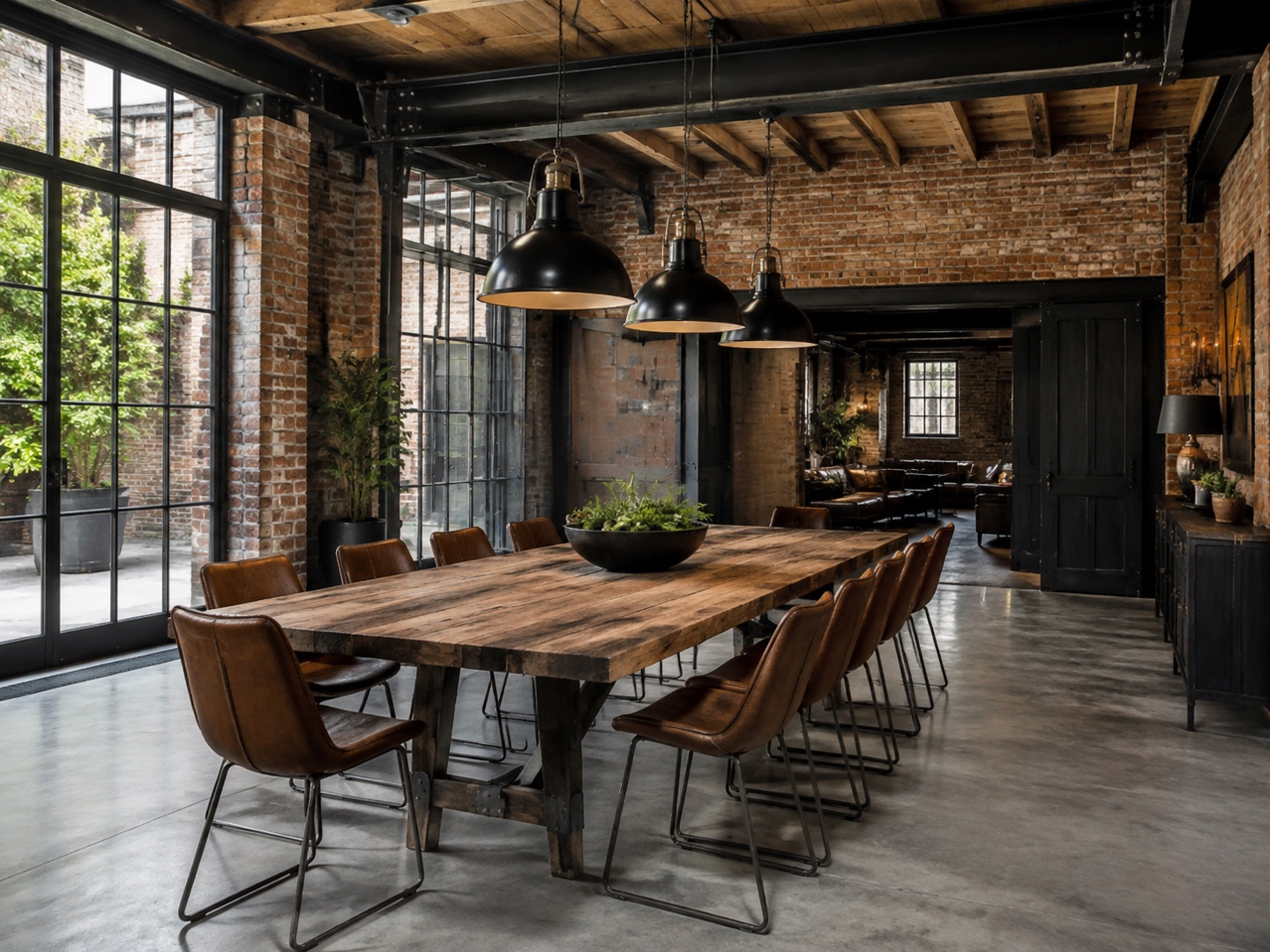
Industrial interiors use materials and forms associated with working buildings, including metal, wood and exposed structural elements. IKEA's examples use sturdy furniture and visible material character to express the look. IKEA's industrial guide
Our dining-room reference has brick, steel-framed windows and a substantial timber table. In an ordinary apartment, try the table-and-chair relationship or the dark metal lighting.
Art Deco
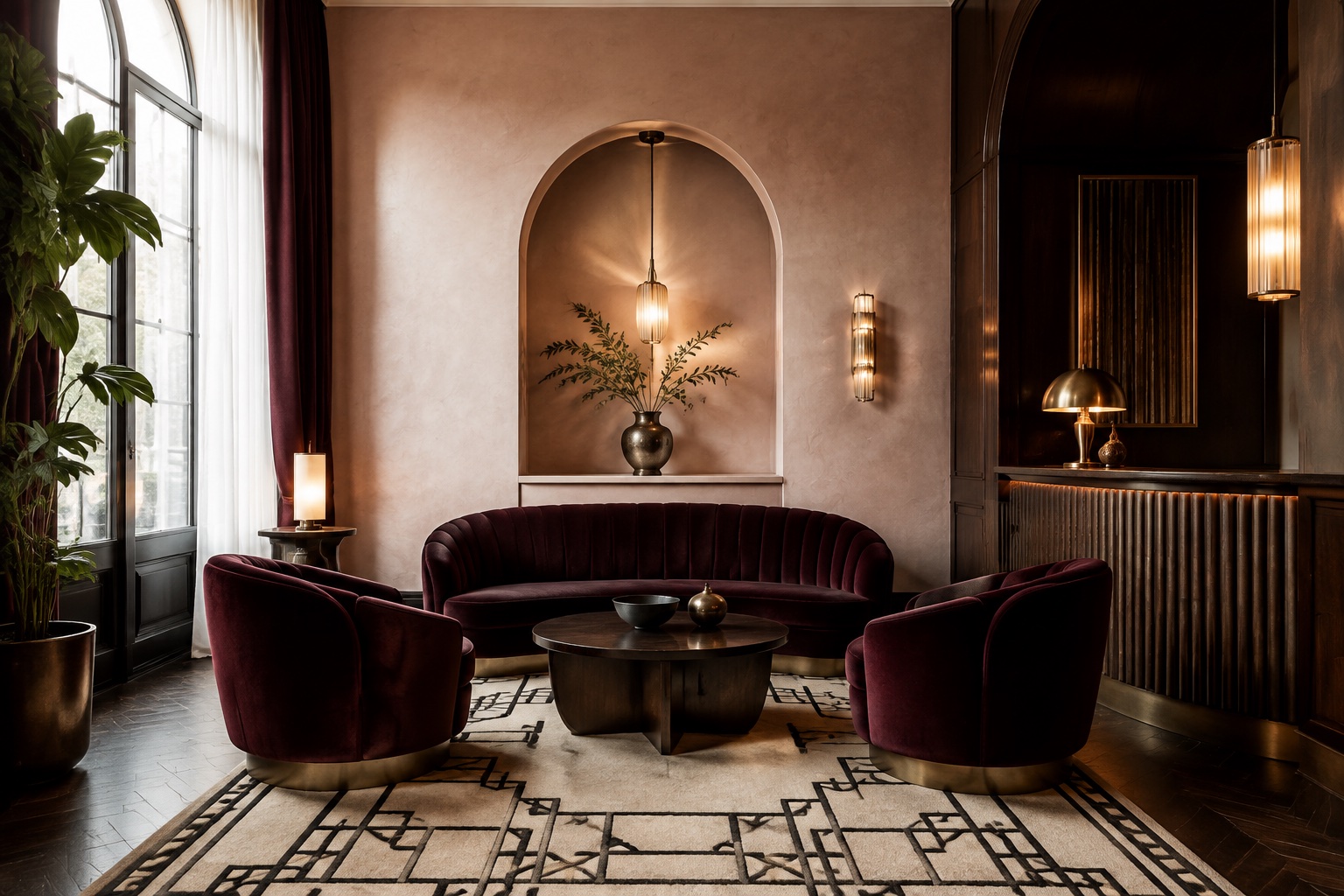
Art Deco brings together geometric ornament, craftsmanship and a decorative sense of modernity. It developed across furniture, decorative objects and interiors during the 1920s and 1930s. V&A's Art Deco collection
The reference uses curved seating, a geometric rug and metallic details. To explore it in your room, choose a focal piece with a strong shape, then repeat one of its lines in a lamp, mirror or textile. Leave enough quiet space for the details to be visible.
Bohemian
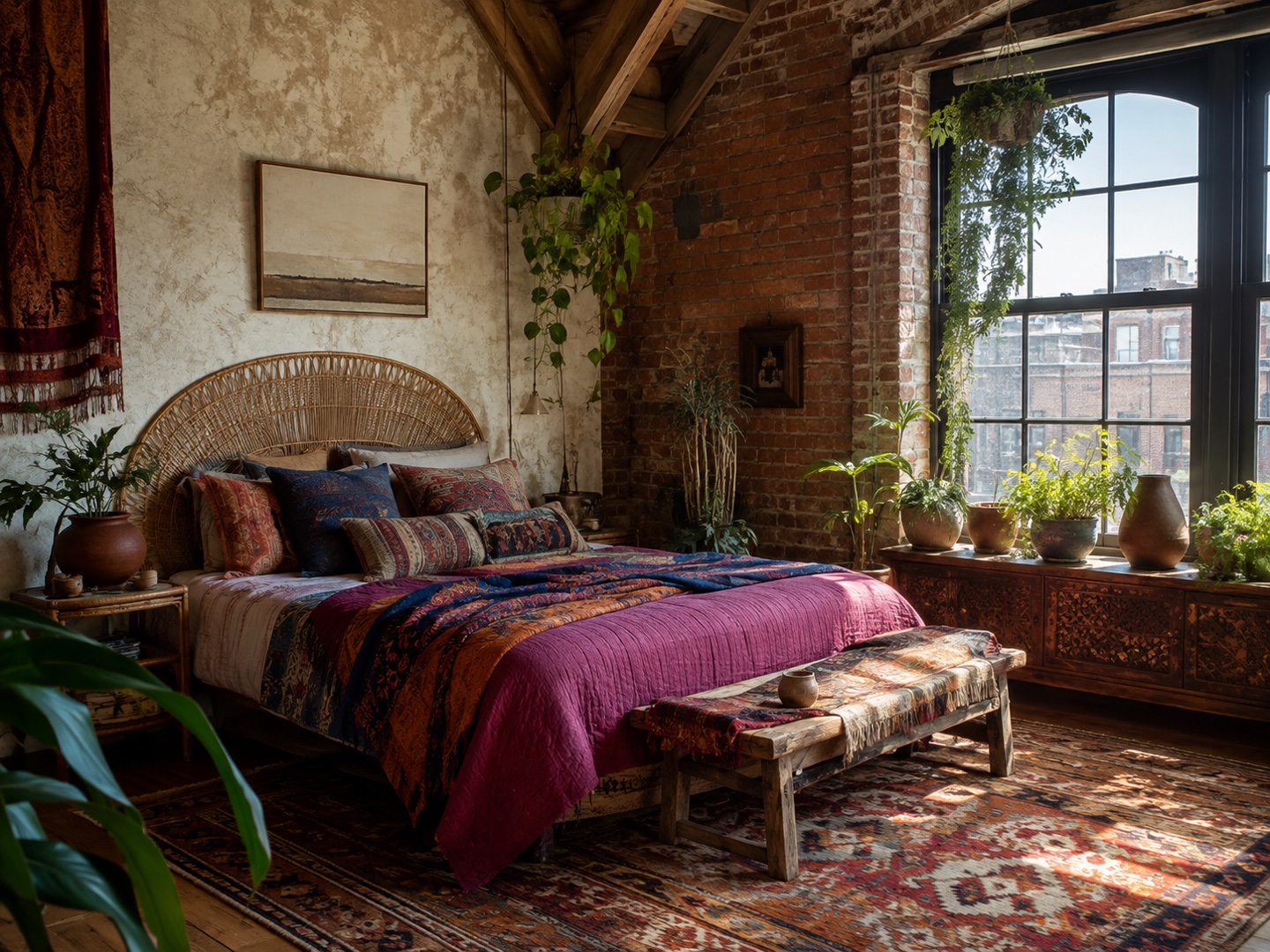
Bohemian interiors are associated with a relaxed mix of textiles, objects and personal influences. Layering is often part of the look. IKEA presents boho as a way to express individuality through furnishings and accessories. IKEA's style guide
The reference combines patterned fabrics, woven furniture and plants. Start with a textile or object you already love, then repeat one of its colors elsewhere. That gives a layered room a connection without requiring everything to match.
Coastal
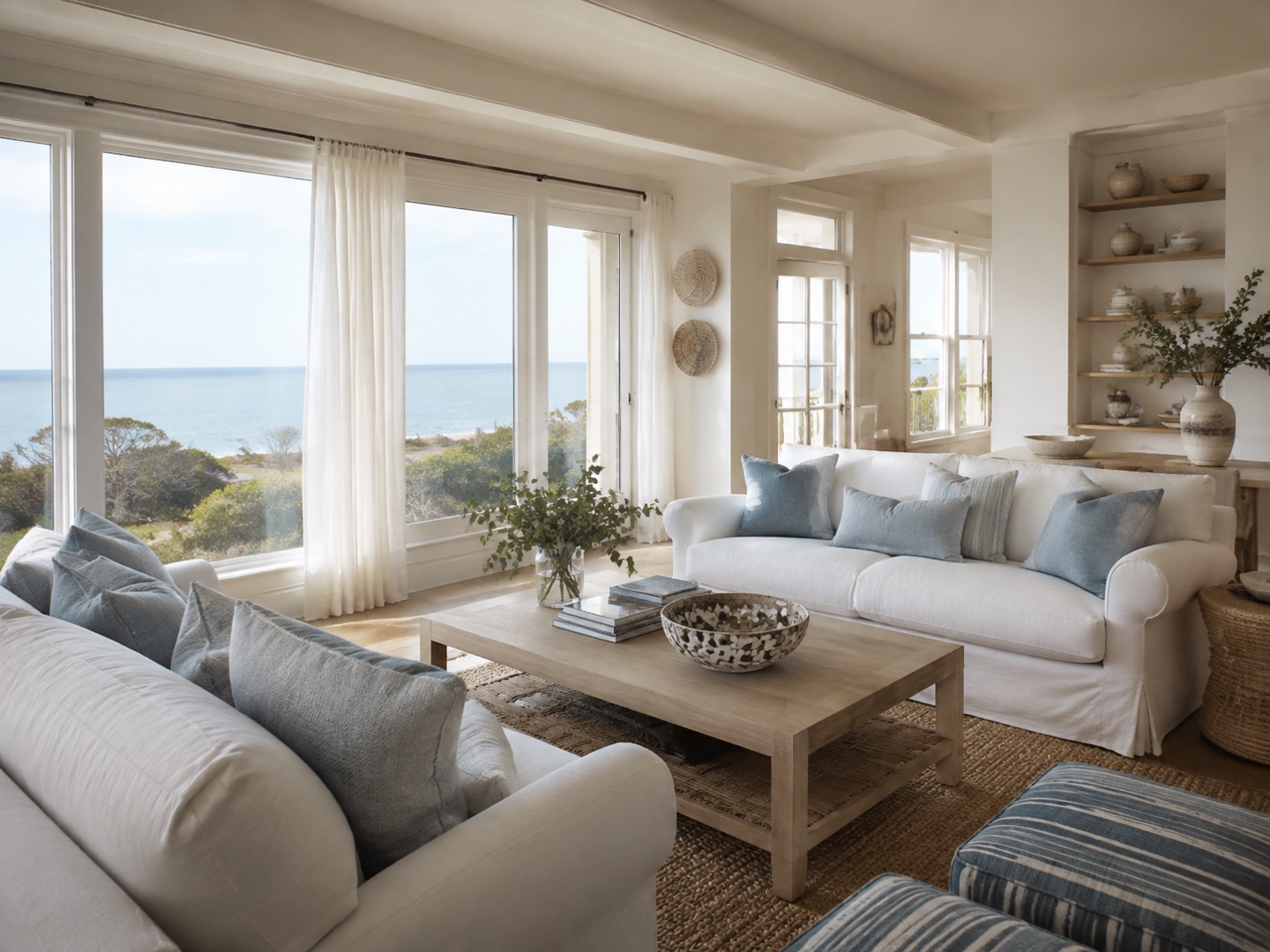
Coastal interiors draw on the lightness, colors and materials of seaside settings. Light fabrics, soft blue accents and woven textures bring that seaside feeling indoors. Livspace's coastal guide
Our example uses light upholstery, soft blue accents and woven texture. You can explore those relationships away from the coast. Try a lighter fabric against natural wood, then decide whether the room needs color, texture or simply fewer competing objects.
Modernist
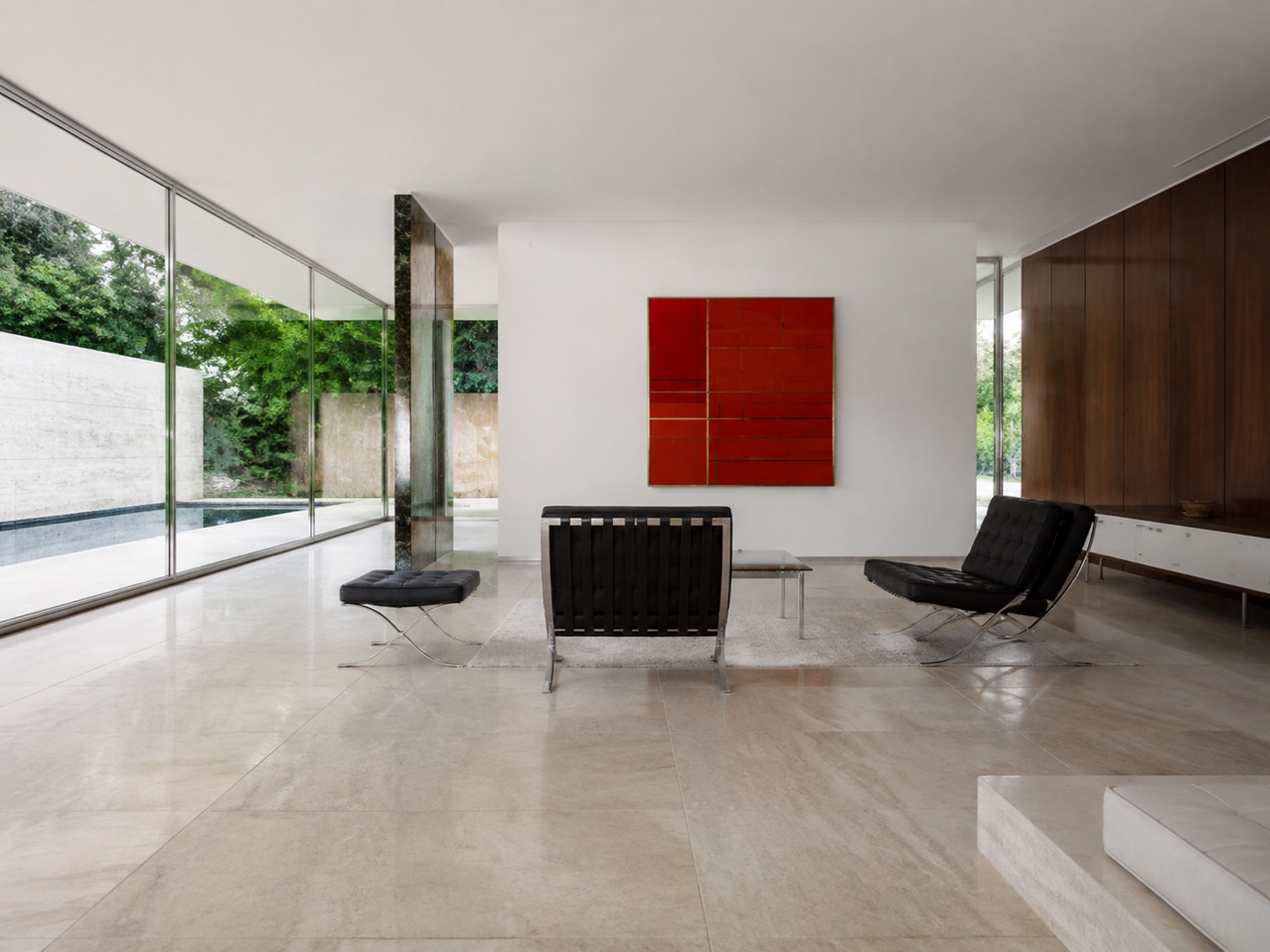
Modernism brought together ideas about design and modern life. In interiors, simple forms, open spatial relationships and materials such as steel and glass are useful clues. V&A on Modernism
Our reference emphasizes the relationship between a few pieces of furniture and a strongly defined space. To borrow from it, consider the outlines and placement of your largest pieces before choosing accessories.
Bauhaus
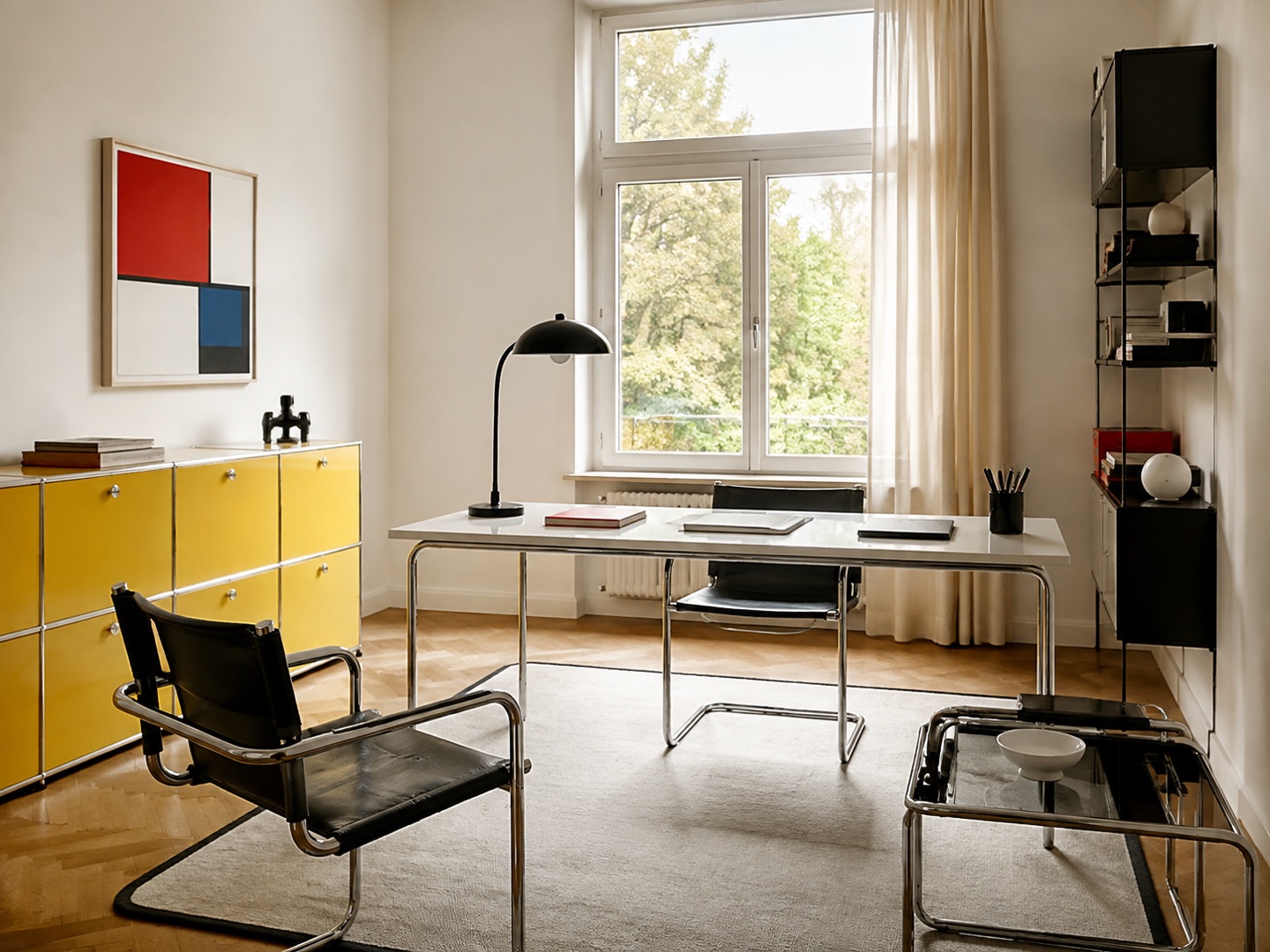
The Bauhaus was a school whose work helped shape modern design. Its legacy includes the relationship between function, materials, art and industrial production. Look for tubular-steel frames, simple geometric forms and furniture whose structure is clearly visible. V&A on the Bauhaus
Look at how the chair frames and desk work in our study reference. Try a clearly structured furniture piece and give it room to be seen. Geometric color accents can draw attention to the furniture and help organize the room.
Art Nouveau
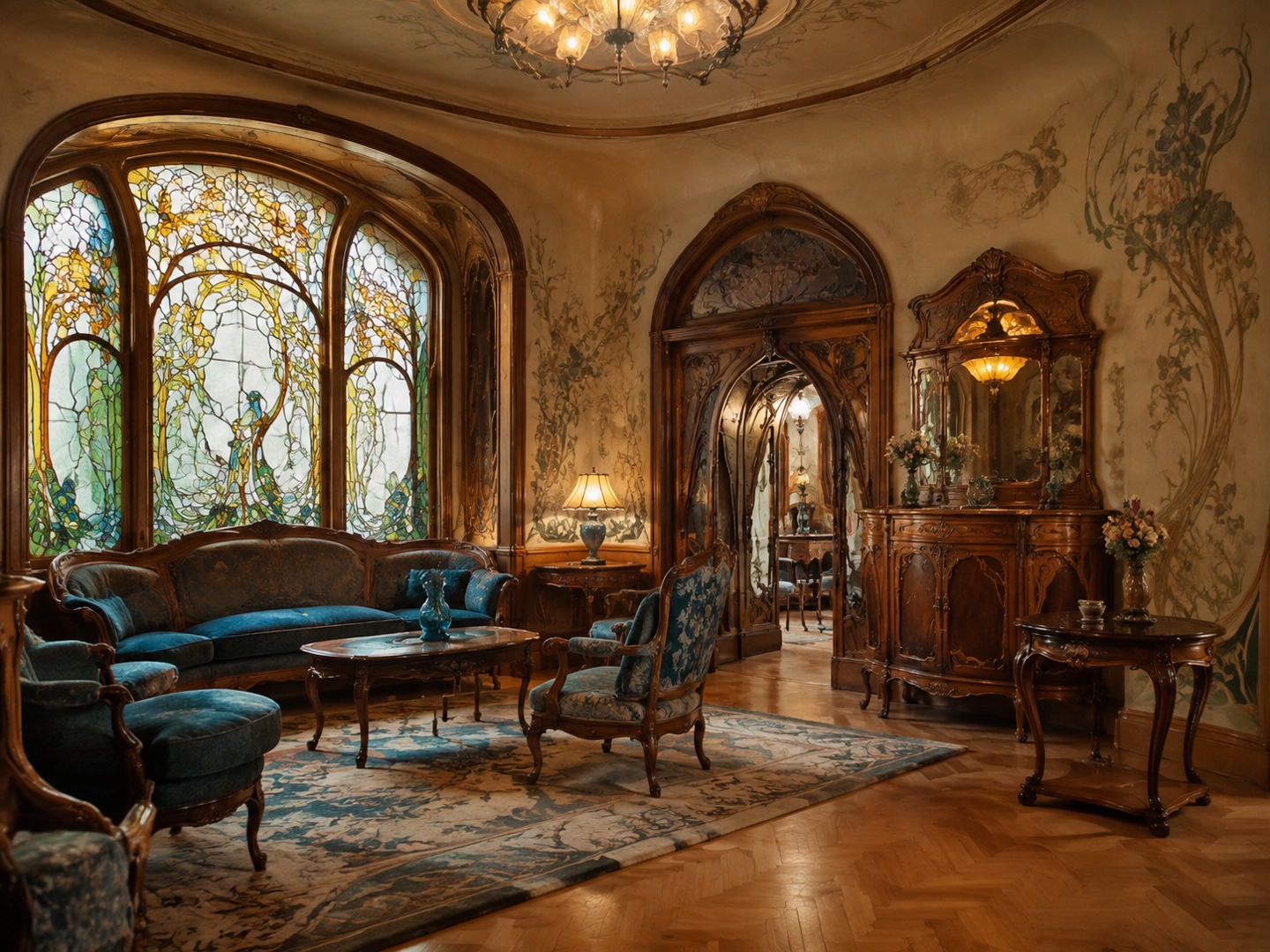
Art Nouveau developed in the late nineteenth century, drawing on natural forms and bringing decoration into the design of objects and buildings. Flowing, plant-like lines are a familiar clue in its furniture and decoration. V&A's introduction
Our example emphasizes botanical glass and curved woodwork. For a smaller change, explore a plant-inspired textile, a curved mirror or a lamp with a flowing outline. Start with the detail that catches your eye.
Arts and Crafts
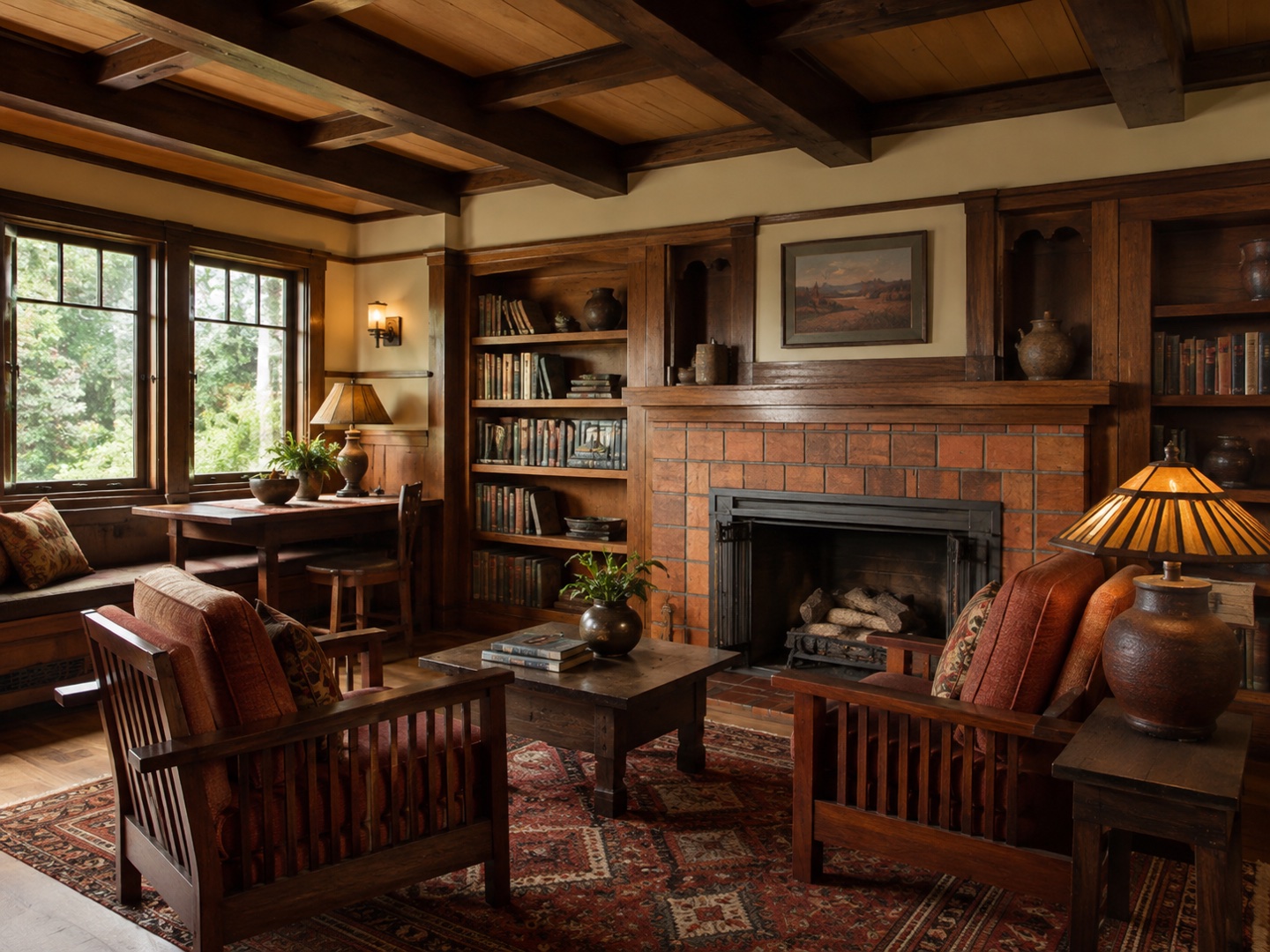
Arts and Crafts placed importance on materials, making and the relationship between useful objects and their surroundings. V&A's introduction
The reference draws attention to timber furniture and a coordinated interior. When exploring this direction, look at construction and detail: how a cabinet is joined, how a textile pattern relates to the room, and whether the objects seem chosen for lasting use.
Memphis
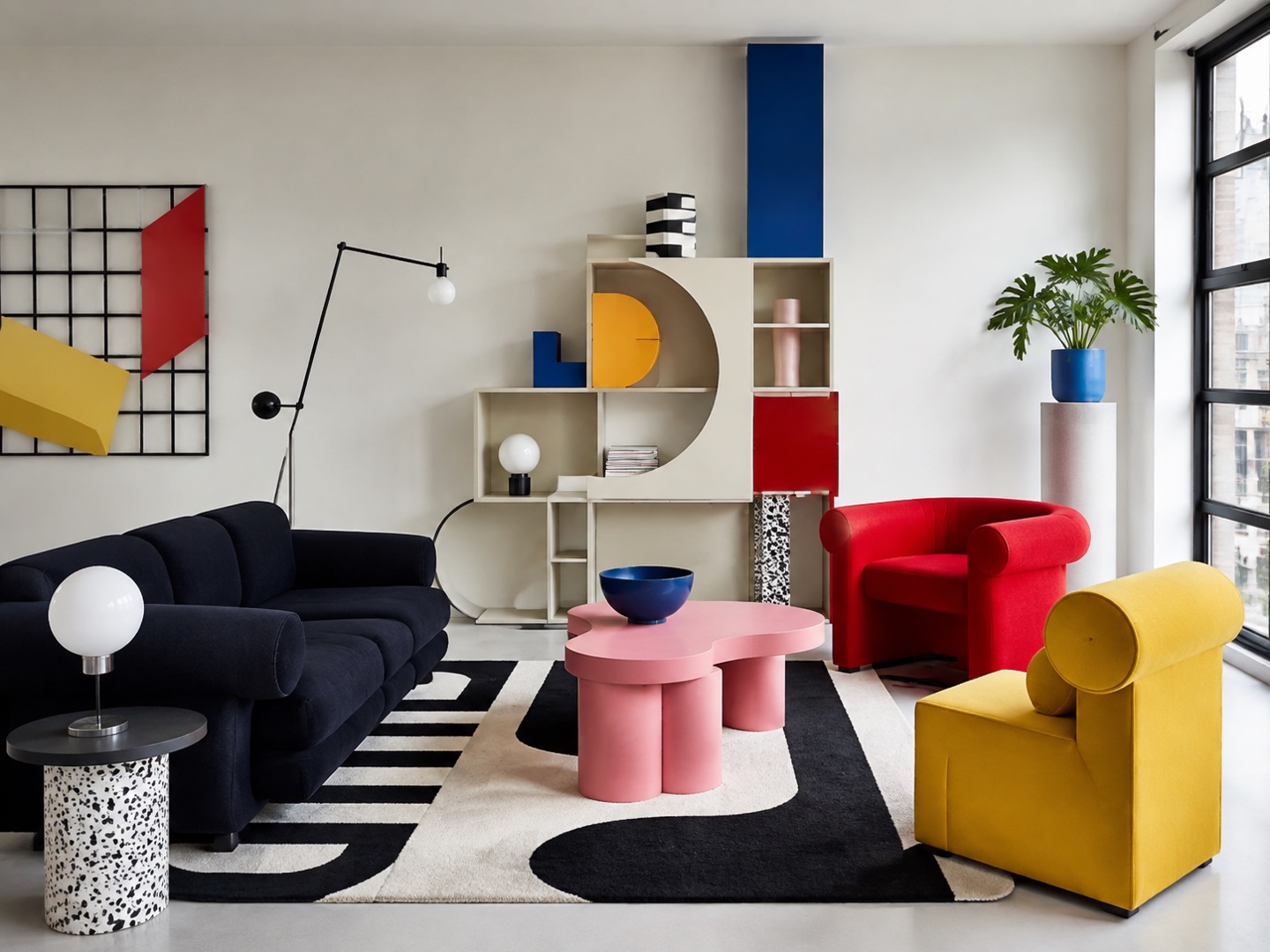
Memphis is a specific design direction within the wider story of postmodernism. Its expressive objects are associated with conspicuous color, unusual geometry and a playful challenge to conventional taste. V&A on postmodernism
In our reference, the furniture introduces playful shapes and contrasting colors. Start with a sculptural object, such as an unusually shaped chair or table, and give it space to stand out.
French Country
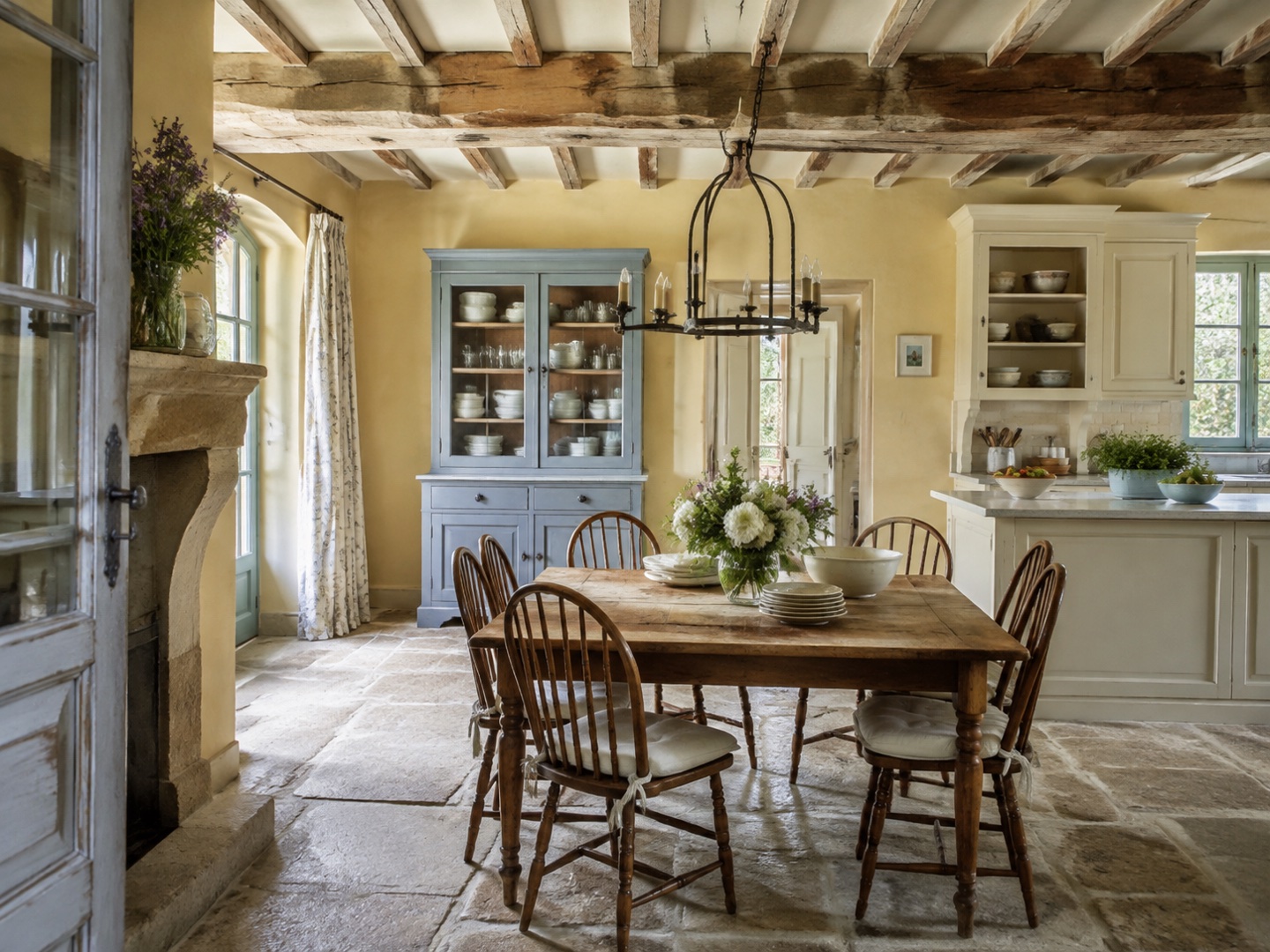
French Country combines traditional furniture with a more rustic, relaxed material setting. The contrast between refined details and everyday texture matters more than recreating a grand formal interior. Havenly's French Country guide
The reference places traditional furniture alongside exposed timber and soft colors. Try a shaped wooden chair with a simpler table, or pair a decorative frame with plain fabric. If the room feels too formal, simplify one element rather than adding more ornament.
Mediterranean
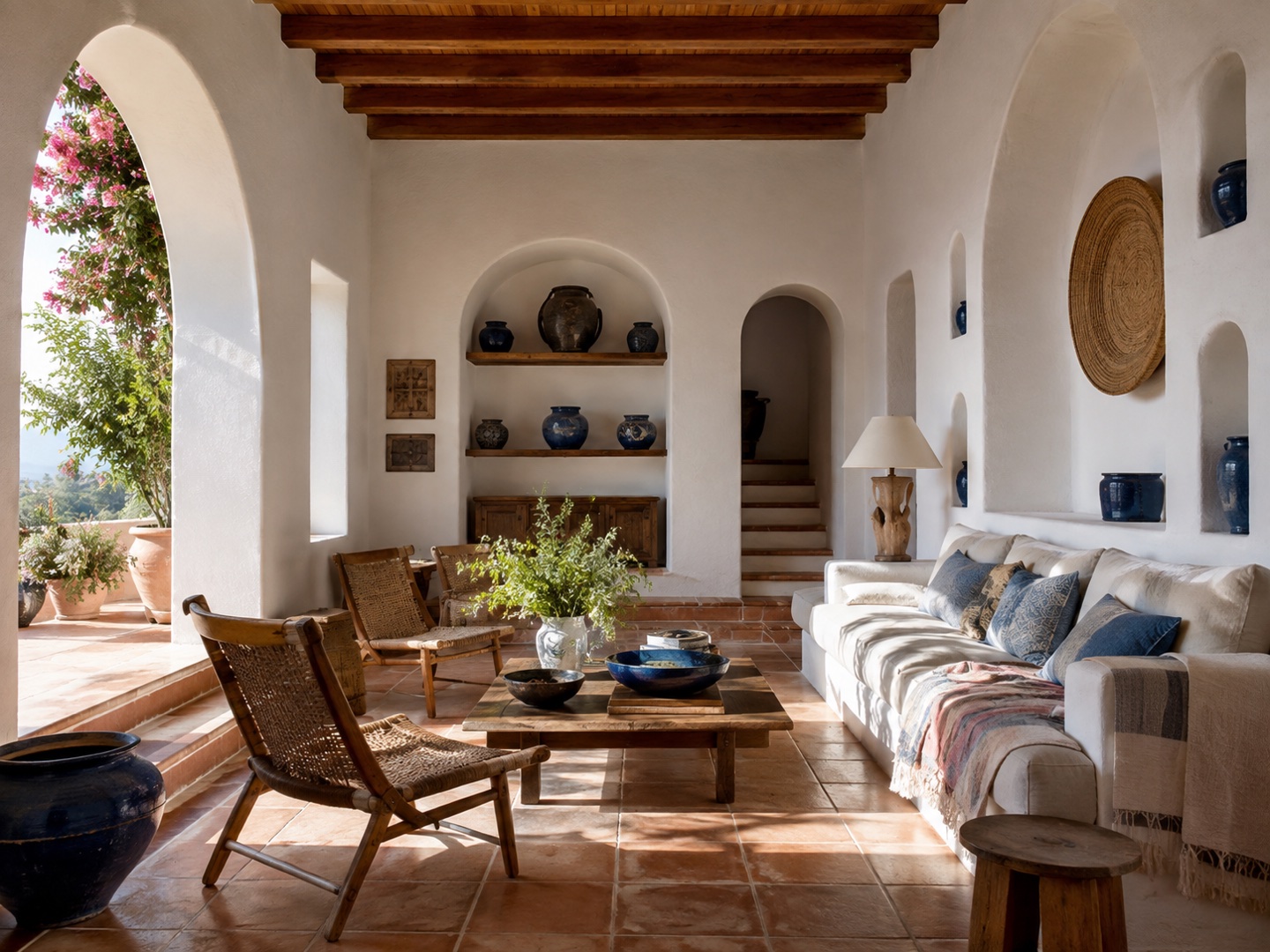
Mediterranean interiors draw on varied regional traditions. Natural textures, earthy colors and blue-and-white palettes offer several directions to explore. Havenly's Mediterranean guide
Our image combines pale walls, warm flooring, timber and woven details. Borrow the material relationship first. Describe the textures and colors you would like to bring into your own room.
Indian Traditional
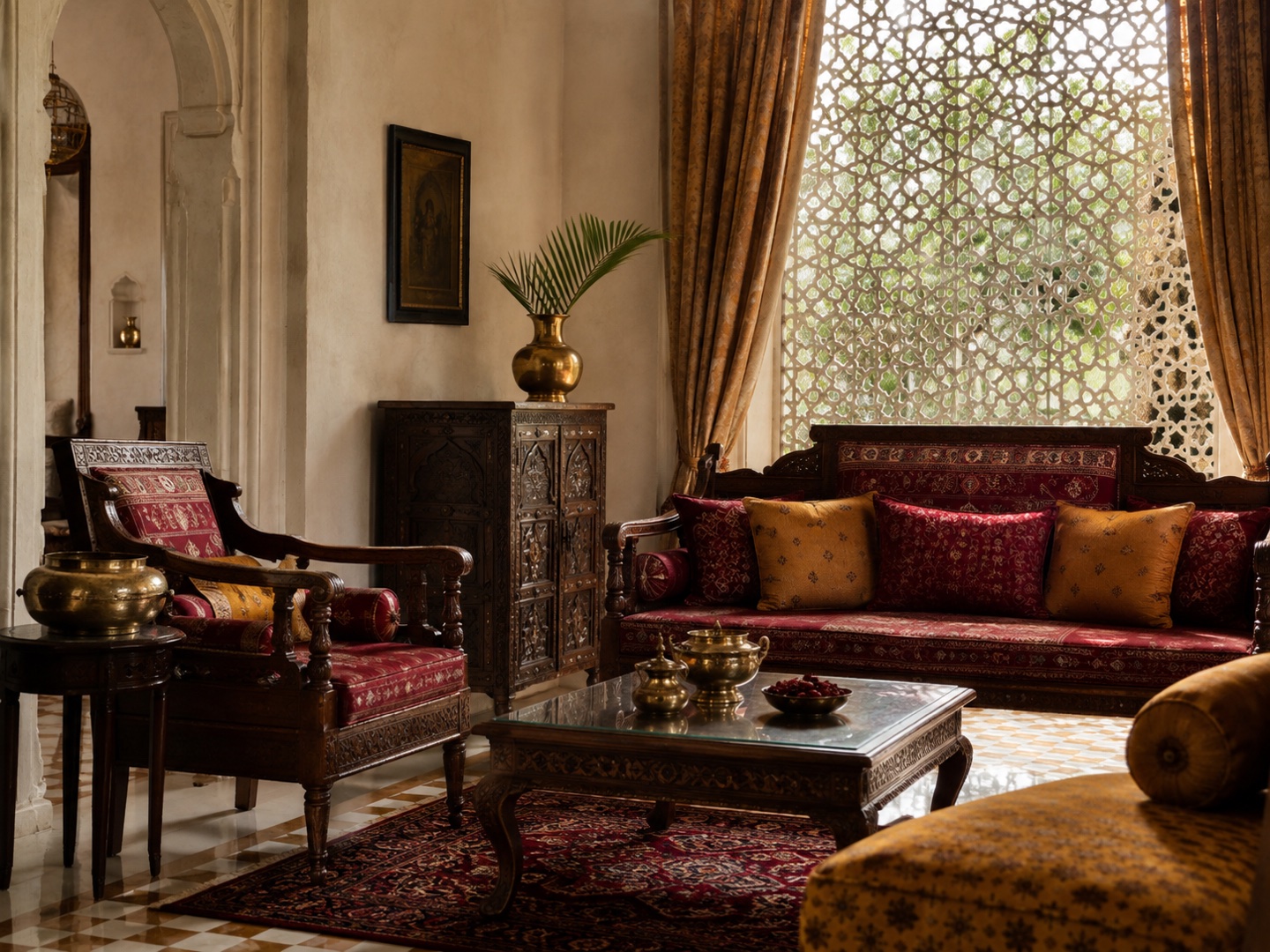
Indian Traditional is a broad label covering diverse regional practices. Livspace's own projects show different combinations of woodwork, textiles, craftsmanship and inherited objects, including homes that bring together more than one regional influence. Livspace's home examples
The reference highlights carved furniture, rich fabrics and metal details. Use those visible features as a starting point. If a particular place, craft or family object matters to your design, name it.
Contemporary
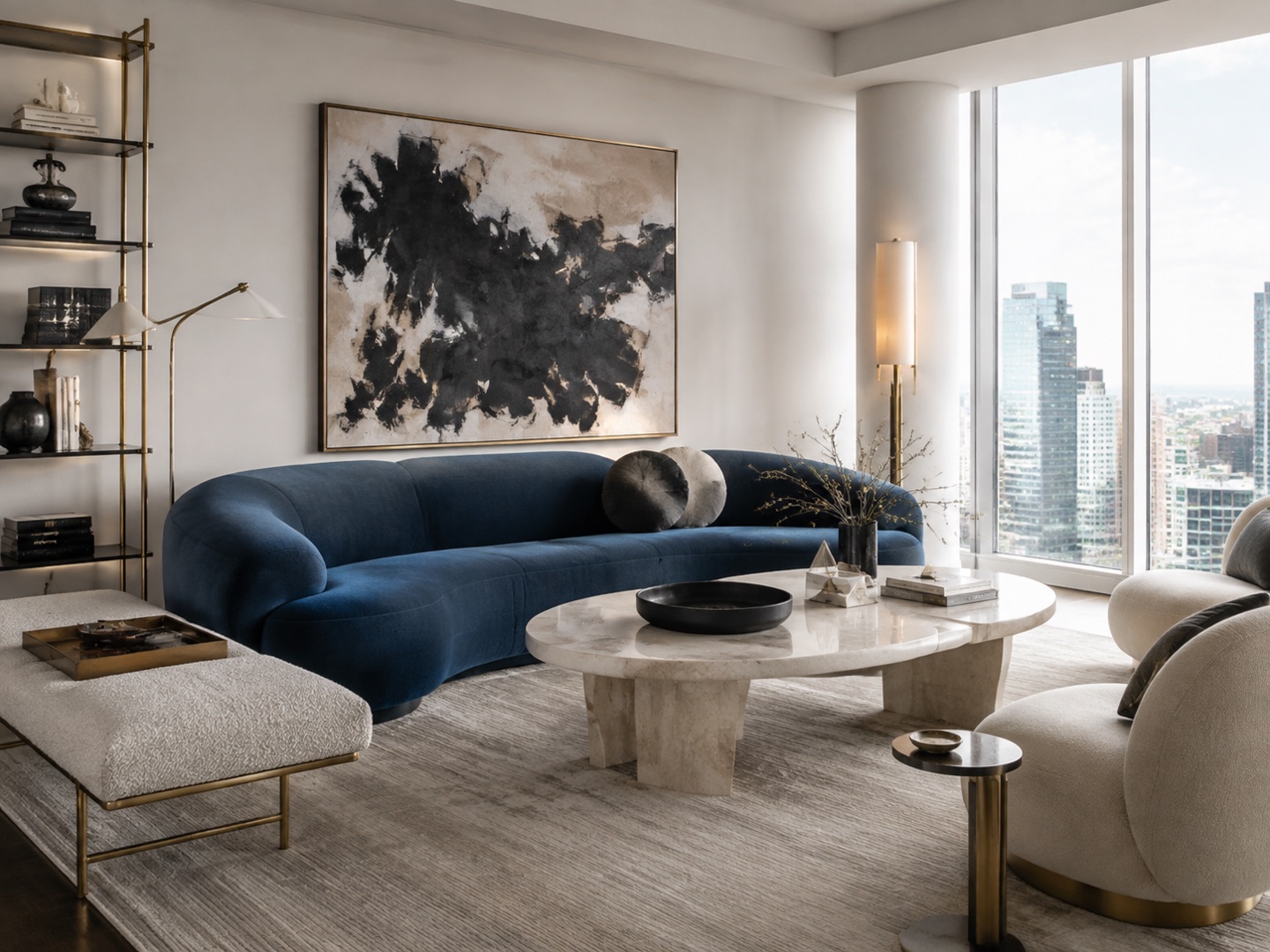
Contemporary describes design associated with the present. Unlike a historical movement, its visual vocabulary changes over time. Livspace's style guide
Our example pairs rounded upholstery with a substantial sculptural table and restrained detailing. Be specific about the current look you like: "curved sofa, pale stone table and minimal ornament" is easier to act on than "make it contemporary." It also gives you a clearer basis for judging the result.
Minimalist
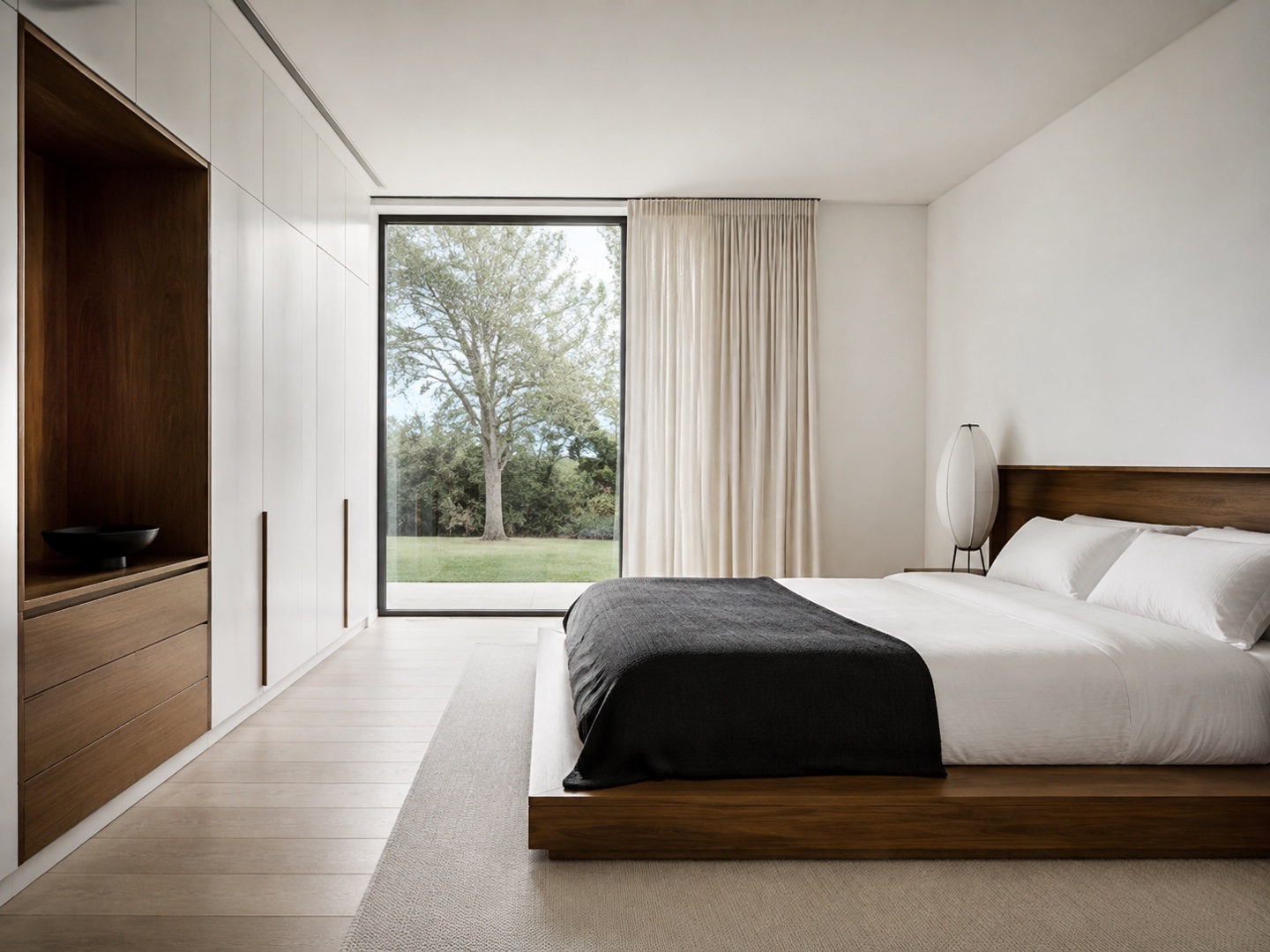
Minimalist interiors emphasize reduction and space around what remains. The arrangement matters as much as the objects. Livspace's style guide
In our bedroom reference, the bed, storage and window carry most of the composition. Begin by deciding what the room needs to do and what must be stored. Plan storage for everyday belongings so the room stays easy to use and visually calm.
Japandi
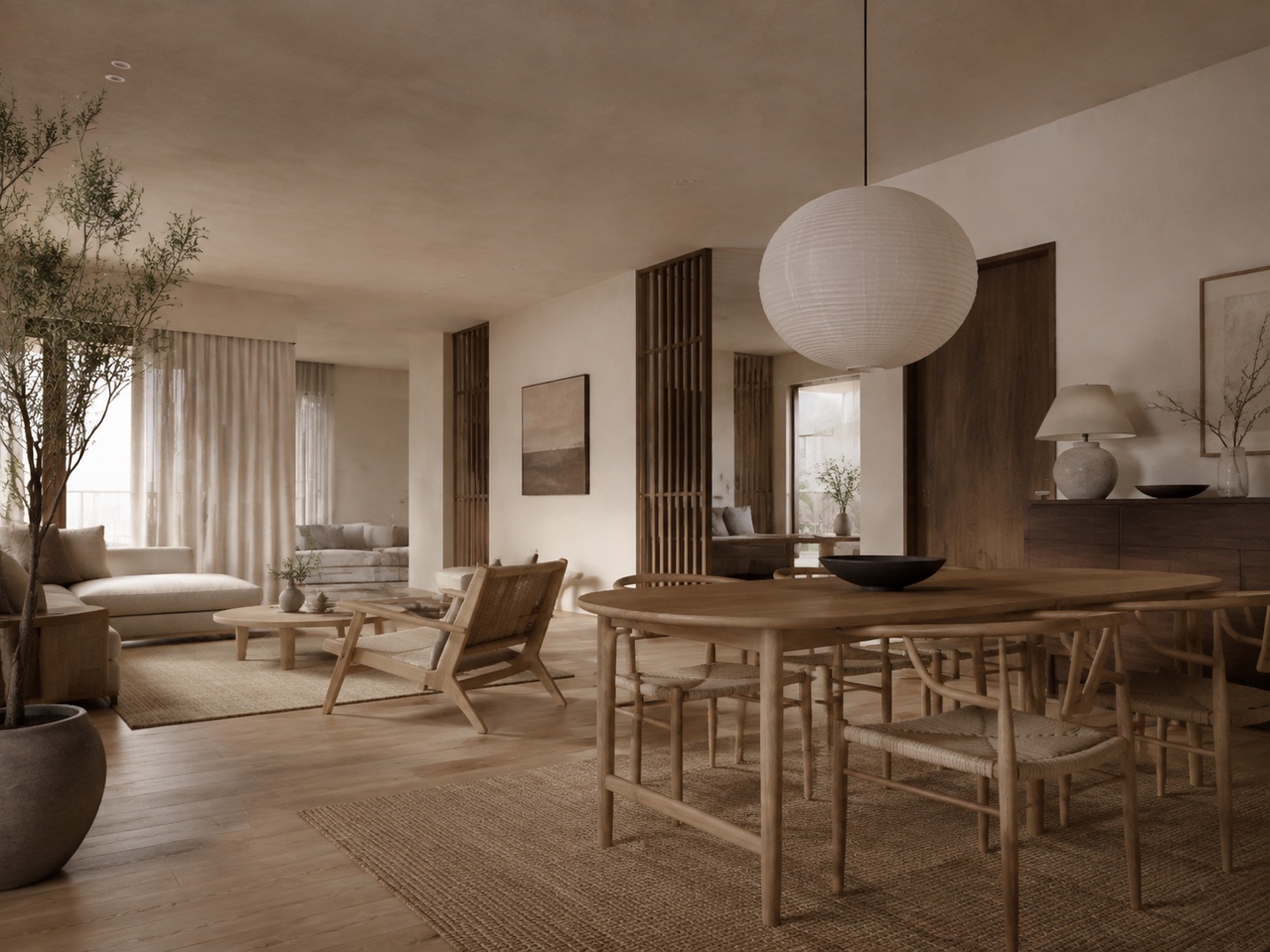
Japandi combines Japanese and Scandinavian design influences. Simple forms and a restrained approach to furnishings connect the two. IKEA's Japandi introduction
Our reference uses wood, uncomplicated furniture and limited decoration. When comparing it with Scandinavian or Organic Modern, look at the furniture profiles, the amount of layering and the colors. Try describing the balance you want between open space and tactile comfort.
Organic Modern
Organic Modern combines simple modern forms with natural materials and varied textures. Havenly's guide shows how material contrast can make a restrained room feel warmer and more layered. Havenly's Organic Modern guide
In our reference, rounded seating sits alongside wood and textured surfaces. If your room already has simple furniture, start by changing the material relationships: a woven rug, a textured fabric or a contrasting wooden piece. You may prefer that change to adding more decoration.
Wabi-Sabi Inspired
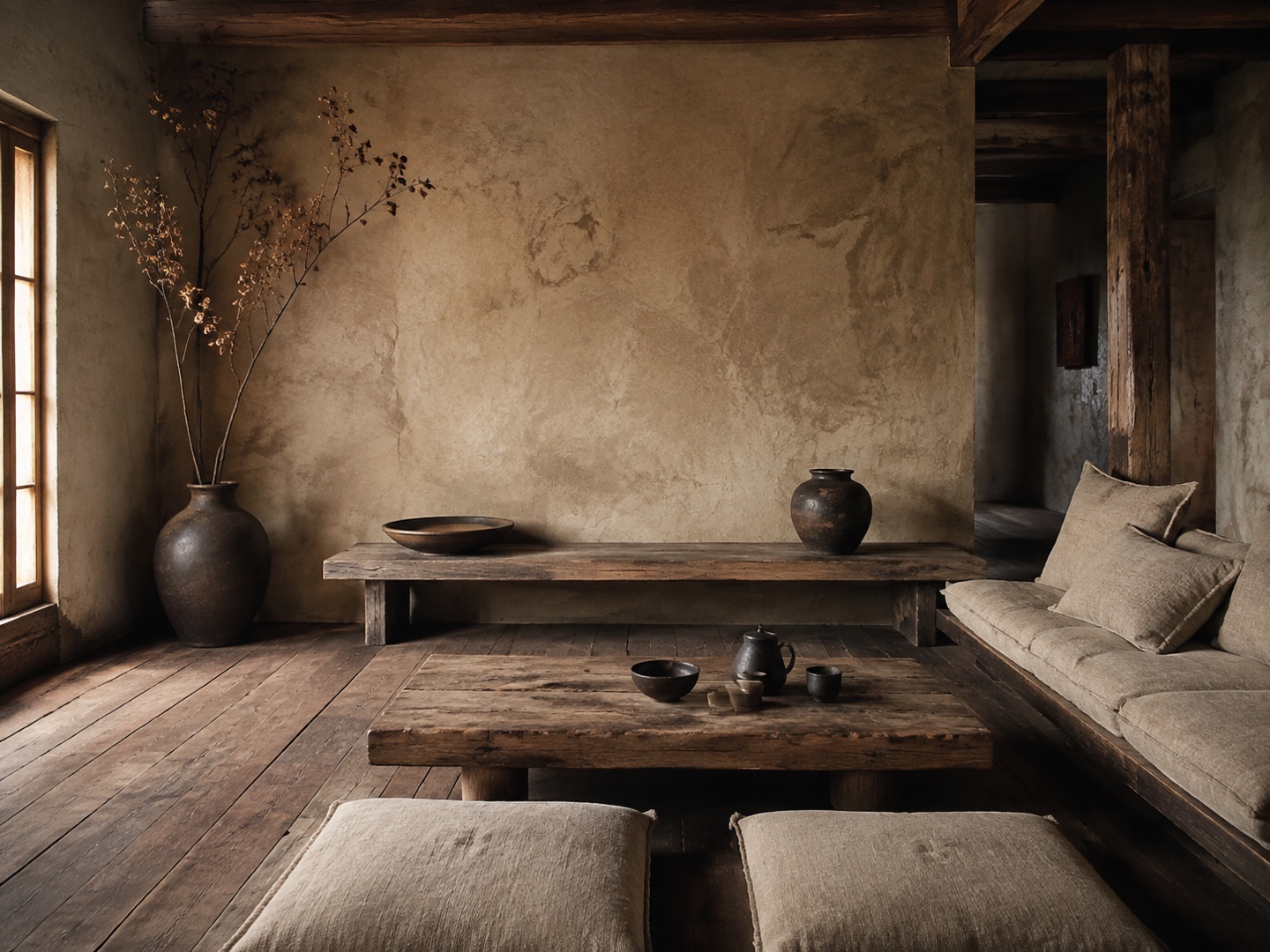
Wabi-sabi concerns an appreciation of imperfection, time and the character of materials. In a room, that appreciation can show through worn wood, uneven surfaces and objects with a personal history. Livspace's introduction
The reference emphasizes uneven surfaces, simple furniture and visible wear. Look at whether an object feels worth keeping for its material or history. An aged wooden object can bring texture and a sense of history into the room.
Traditional
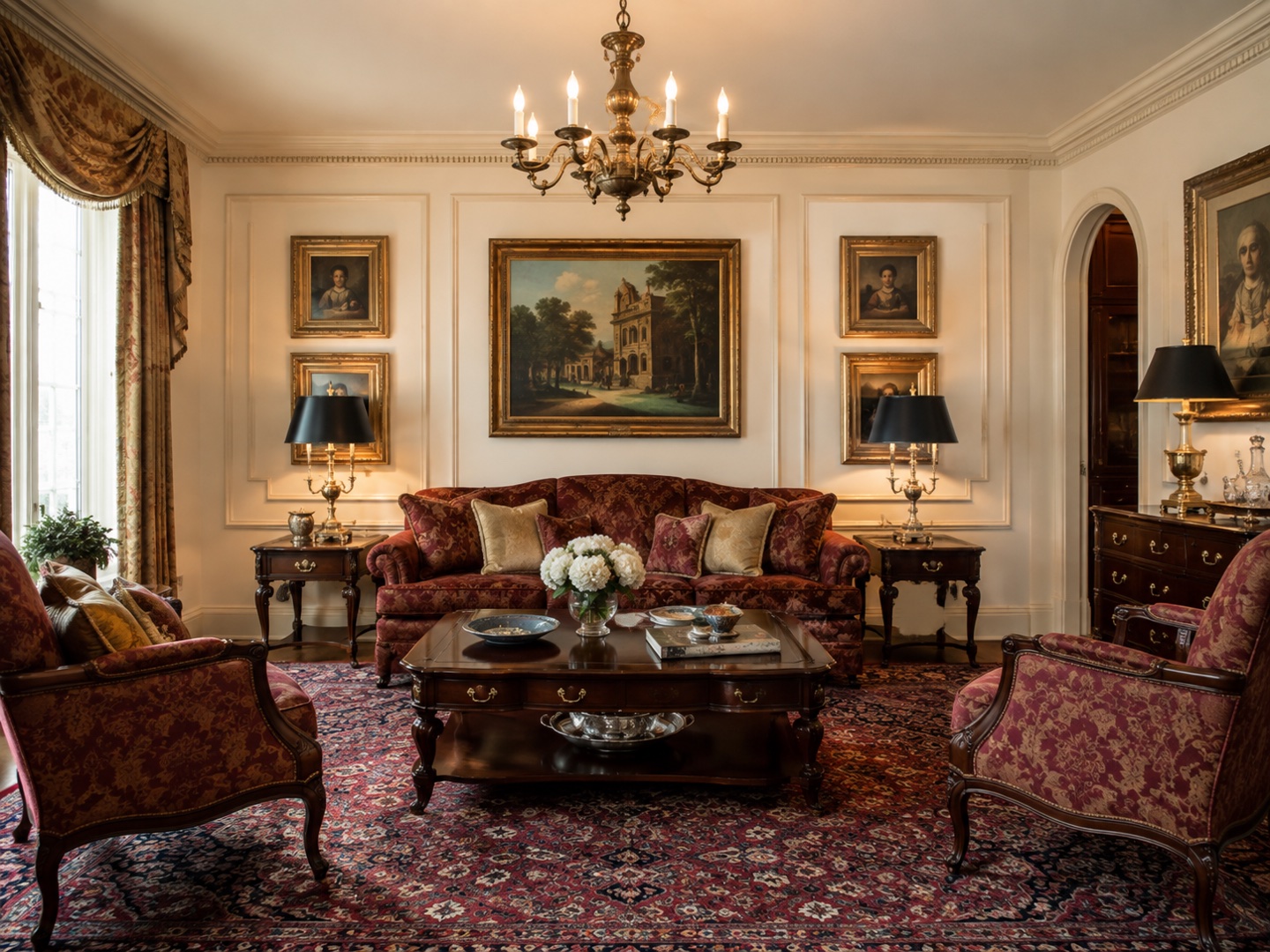
In furnishing guides, Traditional is often used for classic furniture and established decorative forms. IKEA's style guide
Our reference shows a formal arrangement, framed art and detailed furnishings. Try bringing that sense of balance into your own room. Begin with furniture placement or a repeated shape, then decide how much pattern and ornament you enjoy.
Transitional
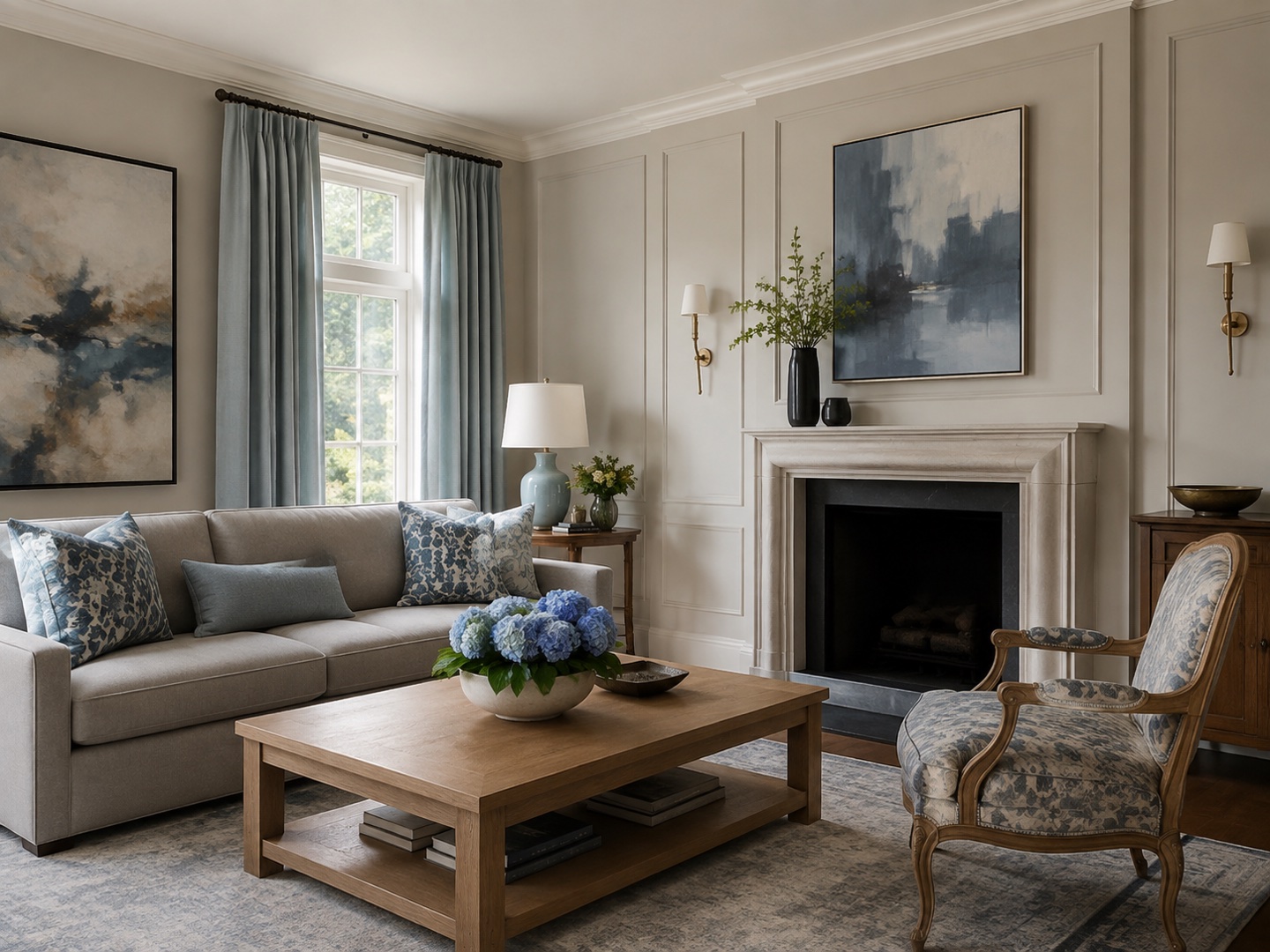
Transitional brings traditional and modern elements together. It offers a useful starting point when you want an existing classic piece to sit comfortably with simpler furniture. Livspace's style guide
The reference places restrained upholstery near traditional architectural details. Choose the element you want to keep, then simplify or contrast the pieces around it. This is a more focused conversation than asking for an unrestricted mix of styles.
Eclectic
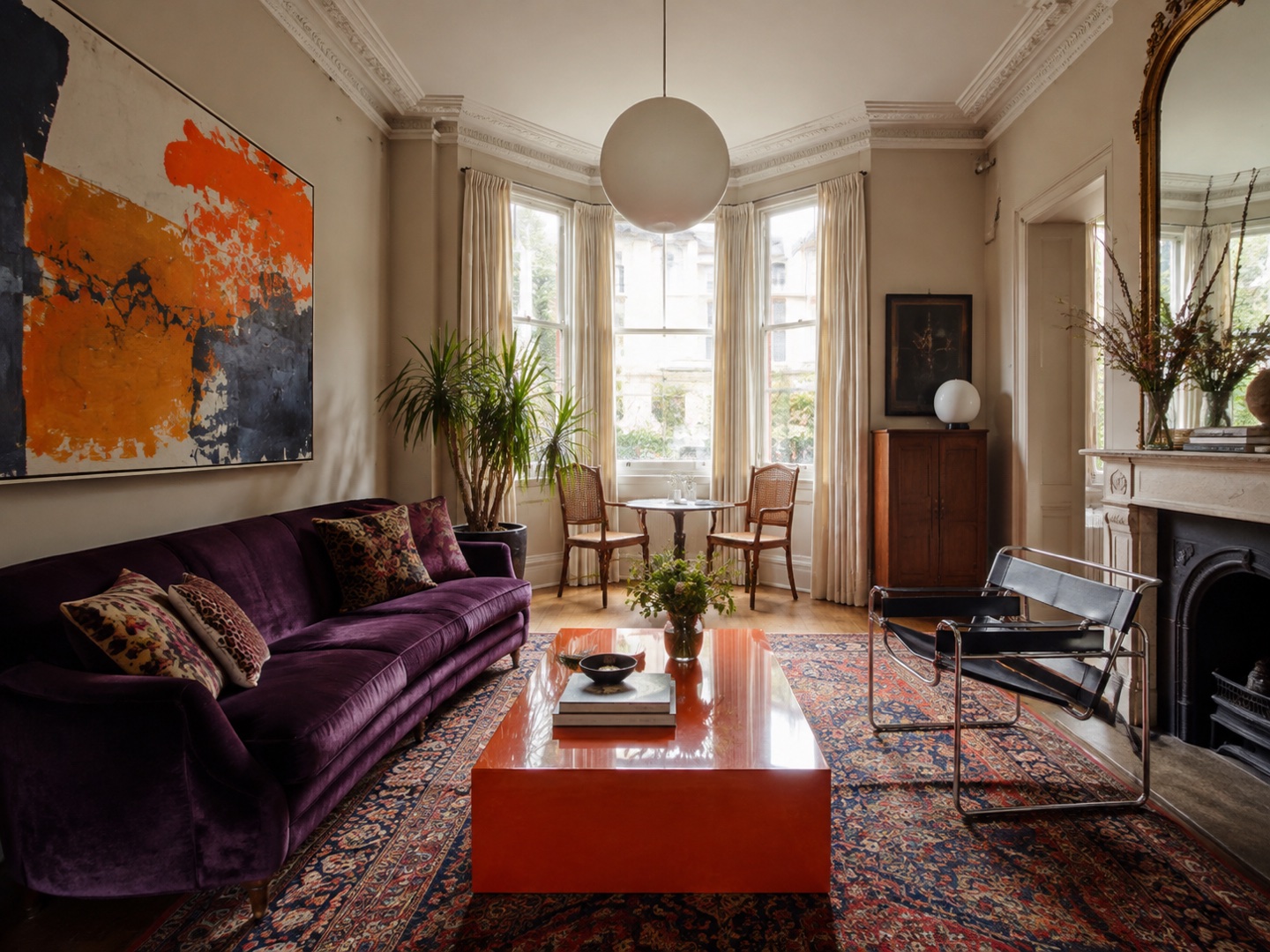
Eclectic describes a combination of differing influences, periods or forms. The relationship between the pieces gives the room its character. Livspace's style guide
Our reference pairs a traditional-looking setting with bold art and contrasting furniture. Find one connection you can repeat, such as a color, curve or material. You can enjoy a deliberate mismatch without giving every object equal visual attention.
Modern Farmhouse
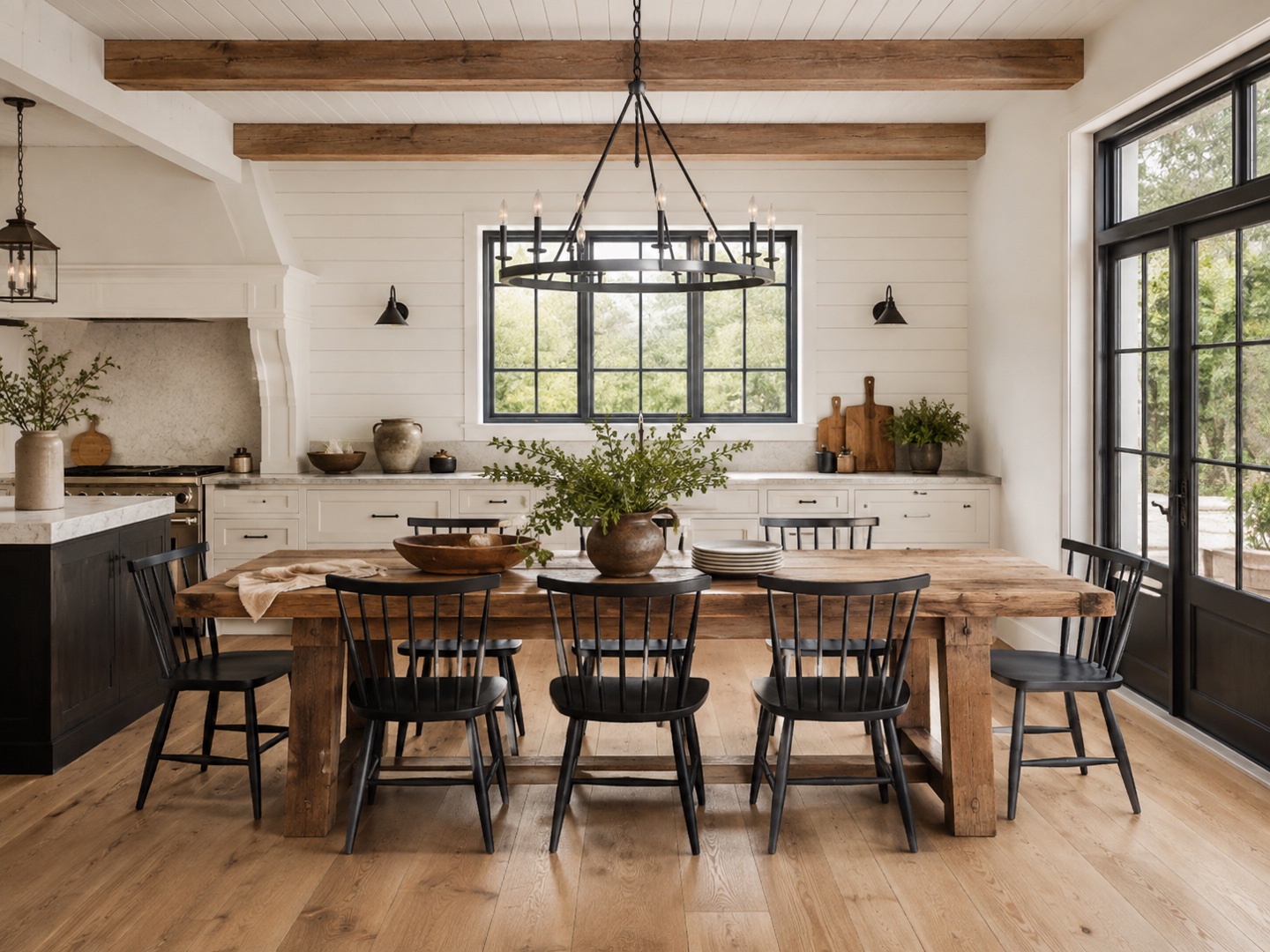
Modern Farmhouse combines rustic and traditional elements with contemporary details. Havenly's project example pairs country furniture and natural textures with clean lines and more current accents. Havenly's Modern Farmhouse home tour
Our reference combines a substantial wooden dining table, simpler dark chairs and a restrained setting. If that is what attracts you, describe those features directly.
Similar styles, different decisions
These comparisons are useful when two reference images appeal to you. Use them to compare furniture shapes, materials and the overall arrangement.
- Comparing
- Scandinavian and Japandi
- Ask yourself
- Am I drawn to the practical, relaxed mix, or to the more restrained furniture and arrangement in this particular example?
- What the answer changes
- Which furniture profiles to keep and how much layering to add
- Comparing
- Minimalist and Organic Modern
- Ask yourself
- Do I mainly want fewer competing objects, or more warmth through texture?
- What the answer changes
- Whether to remove visual clutter or change materials first
- Comparing
- Japandi and Wabi-Sabi Inspired
- Ask yourself
- Is the appeal the composed arrangement, or the irregularity and age of the materials?
- What the answer changes
- Whether to emphasize alignment and form, or material character
- Comparing
- Modernist, Bauhaus and Mid-Century Modern
- Ask yourself
- Do I prefer the spatial composition, the structural expression of the furniture, or particular mid-century silhouettes?
- What the answer changes
- Which aspect of modern design to reference, instead of treating the names as interchangeable
- Comparing
- Art Deco and Art Nouveau
- Ask yourself
- Is the detail I like mainly geometric, or does it follow a flowing, plant-like line?
- What the answer changes
- The kind of pattern and ornament to explore; individual pieces may combine both
- Comparing
- Traditional, Transitional and Eclectic
- Ask yourself
- Do I want classic relationships, a focused old-and-new balance, or a wider mixture?
- What the answer changes
- How much contrast to introduce around the pieces I already own
- Comparing
- Coastal and Mediterranean
- Ask yourself
- Am I responding to light fabric and an airy arrangement, or to earthy color and textured surfaces?
- What the answer changes
- The material and color direction; regional interpretations can overlap
- Comparing
- French Country and Modern Farmhouse
- Ask yourself
- Do I want more traditional furniture detail, or simpler shapes around rustic materials?
- What the answer changes
- Which chairs, lighting and decorative details to compare
| Comparing | Ask yourself | What the answer changes |
|---|---|---|
| Scandinavian and Japandi | Am I drawn to the practical, relaxed mix, or to the more restrained furniture and arrangement in this particular example? | Which furniture profiles to keep and how much layering to add |
| Minimalist and Organic Modern | Do I mainly want fewer competing objects, or more warmth through texture? | Whether to remove visual clutter or change materials first |
| Japandi and Wabi-Sabi Inspired | Is the appeal the composed arrangement, or the irregularity and age of the materials? | Whether to emphasize alignment and form, or material character |
| Modernist, Bauhaus and Mid-Century Modern | Do I prefer the spatial composition, the structural expression of the furniture, or particular mid-century silhouettes? | Which aspect of modern design to reference, instead of treating the names as interchangeable |
| Art Deco and Art Nouveau | Is the detail I like mainly geometric, or does it follow a flowing, plant-like line? | The kind of pattern and ornament to explore; individual pieces may combine both |
| Traditional, Transitional and Eclectic | Do I want classic relationships, a focused old-and-new balance, or a wider mixture? | How much contrast to introduce around the pieces I already own |
| Coastal and Mediterranean | Am I responding to light fabric and an airy arrangement, or to earthy color and textured surfaces? | The material and color direction; regional interpretations can overlap |
| French Country and Modern Farmhouse | Do I want more traditional furniture detail, or simpler shapes around rustic materials? | Which chairs, lighting and decorative details to compare |
Knowing which features you enjoy gives you a useful starting point for your room.
Torn between two styles? Explore both with your own room photo in AI Room Design. Generate a preview for each style, then compare which furniture, textures and colors you would enjoy living with.
Choose a direction that works with your room
Start with what stays
List the elements you plan to keep: flooring, a sofa, a bed, built-in storage, a fireplace or artwork. Include what you cannot easily change. Build your design around these familiar pieces and features.
Then write what the room must do. A bedroom used for sleep and work needs more thought than a photograph of a bed. A living room may need to accommodate children, visitors or a clear path to a balcony.
Separate the look from the setting
A reference may appeal to you because of its huge windows, garden view or high ceiling. Identify the parts you can actually borrow. Furniture shape, fabric, color and the amount of decoration are different decisions from changing the structure of a building.
Use a photo of your room to keep that distinction visible when you explore a new direction.
Pick two references and explain the difference
Choose two styles that offer a meaningful alternative. Write one sentence for each.
- "I prefer the open arrangement and light wooden furniture in this Scandinavian room."
- "I prefer the deeper colors and layered textiles in this Bohemian room."
If both rooms feel cozy, notice what creates that feeling in each one. It might be soft fabrics in one room and warm wood in the other. Those details help you compare the looks you enjoy.
Check everyday use before buying
A design image cannot tell you how a fabric feels, how easily it cleans, whether a cabinet opens fully or whether furniture fits. Before buying, check dimensions, access, material samples and the way you use the room.
Treat a preview as a way to narrow your preferences. Use the actual room and actual products to make the final decisions.
How to mix styles without losing the room's direction
Choose a starting point for the larger relationships, such as furniture shapes or the main materials. Then introduce a contrasting element and give it a connection to something already in the room.
For example, imagine keeping a traditional wooden dining table. You could pair it with simpler chairs, repeat the table's warm wood in a smaller object, and use a plain fabric elsewhere. The table remains the familiar piece while the surrounding choices change the room's character.
When the result feels disconnected, identify the competing decisions. Is every large item a different color? Do all the patterns demand attention? Are several objects trying to be the focal point? Change one of those relationships before buying more pieces.
Look for connections between the main pieces, and notice how the combination feels to live with.
Have a combination in mind? Try it in AI Room Design. Upload your room photo, add a style reference, and describe the pieces you want to keep alongside the new look. A generated preview gives you something to react to and refine.
Turn a style preference into a clear design request
A useful request tells the image tool what to keep, what to explore and which details matter. You can start simply and add detail when you know what you want.
Use this outline:
Keep [the parts of my room that matter]. Explore [style or reference]. Use [specific shapes, colors or materials]. Avoid [the change I do not want].
Here are three starting requests to adapt to your own room.
A warmer direction around an existing sofa
Keep my gray sofa, flooring, windows and room layout. Explore an Organic Modern look with a rounded wooden coffee table, a textured rug and warm neutral fabrics. Keep the surfaces lightly decorated.
A more colorful room without changing its structure
Keep the windows, doors and room layout. Explore a Bohemian direction with layered textiles, warm wood and touches of terracotta and deep blue. Keep a clear route through the room and avoid filling every surface.
An existing piece in a new setting
Keep my wooden dining table and the room's structure. Explore a Transitional look with simpler upholstered chairs, restrained lighting and a muted palette. Let the table remain the main feature.
After generating, compare the image with your original photo. Check the things you asked to keep before judging the decoration. If important details moved or changed, revise the request and treat that result as an exploration rather than a faithful plan.
Preview a style in your own room with AI Room Design
A reference image shows a look in someone else's setting. AI Room Design lets you explore a direction using a photo of your room.
- Upload a clear room photo. Include the parts you want to redesign and the features you want to keep.
- Choose a style reference, or add your own inspiration image. You can also describe your preferences without choosing a named style.
- Say what you want to change and what should stay. Use a simple request or adapt one of the examples above.
- Generate a preview and compare it with the original. Look at the room structure, furniture and details as well as the overall feel.
- Download the result you want to keep. To explore another direction, use the same room photo and adjust the reference or request.
A selected style image provides visual guidance. It does not guarantee an exact copy, accurate dimensions or unchanged details. The result is a design image, not a construction drawing, floor plan or product list.
Preview a style in my roomQuestions about finding your room's style
Do I need to choose one style for my whole home?
You can use different influences in different rooms. If you want them to feel connected, look for a relationship you enjoy repeating, such as a wood tone, a color or a furniture shape. Decide how much consistency you want rather than choosing a label for every object.
Can a small room have a bold style?
Start with the furniture that fits and the space you need to move. Then explore where you want the strongest visual interest: a textile, a wall, lighting or one piece of furniture.
What if I like a reference but not its colors?
Say which parts you want to borrow. For example: "Use the low furniture and simple arrangement from this reference, but explore warm brown and muted blue instead of white." This makes the reference a source of specific ideas rather than an all-or-nothing choice.
Will choosing a style keep all my existing furniture?
Name the furniture you want to keep in your request. A style reference does not communicate that by itself, and AI may still alter objects or details. Compare the preview with your original photograph before relying on it.
How do I know when I have found the right direction?
You should be able to say what you like, what you want to keep and what you would change next. A useful direction makes those decisions easier.
Your room, with a clearer direction
Choose a reference you can explain. Keep the details that matter to you. Then see how a different combination of shapes, materials and colors might look in your own space.
Try AI Room Design